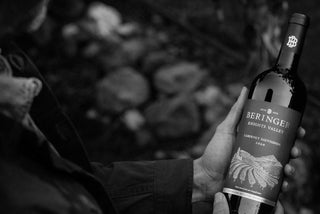

In 2026, Beringer Vineyards proudly marks 150 years as Napa Valley’s longest continuously operating winery – a legacy built on vision, craftsmanship, and innovation since 1876. This milestone is more than an anniversary; it’s a tribute to generations of winemakers, the beauty of Napa Valley, and the enduring spirit that shaped California wine.
During the mid-1960s, as we approached our hundredth anniversary, Napa came to a tipping point. Despite generations of admiration by wine connoisseurs across the globe, Napa wine pioneers, like Beringer, had yet to become household names. But that was all about to change. The time was ripe for “Napa Valley” to become synonymous with great wine worldwide.
Out of the Blue
Like so many “overnight success” stories, the global rise of Napa Valley didn’t happen overnight. Since the mid-1800s, generations of winemakers and growers have been perfecting their understanding of the region’s diverse and unique terroirs, sharing their learnings and innovating to continually elevate the quality of their wines. Between the 1930s and ‘60s, a series of historic events helped build the cultural momentum that Napa Valley needed to finally get its due among the elite of the winemaking world.
Although the 13 years of Prohibition decimated the California wine industry, a handful of wineries that acquired permission to make sacramental wine, like Beringer, used the time to experiment behind the scenes. When Prohibition ended, America was once again “wine curious” and looked to California for guidance. That curiosity began slowly expanding into the mainstream after World War II, when soldiers returning from Europe wanted to experience elements of the lifestyle they’d tasted abroad, including wine, in their own homes. Again, they turned to California. Later, the post-war Boomer generation, many of whom grew up seeing their parents enjoy wine, incorporated it into their own lifestyle and looked to broaden and elevate the experience as they entered adulthood and grew their careers. Once again, the Napa Valley wine community was ready to meet the moment. The size and lifestyle choices of the Boomer generation was exactly the opportunity Napa had been waiting for. Their growers and winemakers could finally focus their attentions (and budgets) on producing the fine-quality wines that had, until then, existed quietly for a small group of connoisseurs.
Beringer: A California Landmark

Just as Napa Valley was beginning its breakthrough years on the world stage, our historic property achieved California landmark status in 1966. This recognition wasn’t about the obvious beauty of the place. It was about our place in Napa’s heritage and how our past helped set the stage for the newly booming Napa Valley wine industry.
Beringer’s property is one of the few wineries remaining in California that are fully complete. That is, the buildings and landscape show how residential and business spaces co-existed on the same property in the 19th century, when it was standard practice for entrepreneurs and their families to live together right next to their businesses.

The Beringer Winery Historic District includes the Stone Winery, the Rhine House (the custom-built home modeled after the Beringer brothers’ childhood home in Mainz, Germany), the Hudson House (their original California home, purchased with the land), outbuildings, lanes, gardens, orchards, etc. The extremely high level of craftsmanship and expensive materials used for the homes, winery, and landscaping, in what is essentially an industrial environment, highlight just how much pride the Beringers took in their business — and in showing it off to the community and visitors.
Taking It to the Next Level: Beringer’s Private Reserve Program

Napa Valley red wines (and some whites) are known for being aged in French oak barrels. But that wasn’t always the case, or at least not for any but the finest, small-batch wines reserved for the elite few. As Napa rose in prominence and wine drinkers increasingly demanded high-quality wines, winemakers were able to grow their fine wine programs.

The Beringer family were always strong believers in the value of oak in fine winemaking. Jacob and Frederick commissioned large American oak casks, ranging from 300 to 600 gallons, and barrels, from 50 to 150 gallons, when they first built the winery. Those vessels were significantly smaller than what many of their peers chose, 5,000- and even 50,000-gallon tanks. That’s because, based on their experience in Europe, the brothers rightly believed smaller meant better control and quality. Having more wood surface in contact with the wine allowed it to “breathe” better while aging. Frequent refilling and evaporation in smaller barrels settles the sediment and leaves only the best-quality wine for blending in larger casks during the multi-year aging period.

In 1977, renowned winemaker Myron Nightingale and his then assistant, Ed Sbragia, collaborated to create the Beringer Private Reserve program. This innovation built on the winery’s long-running oak tradition and elevated it, exchanging American oak barrels for those made in the prestigious Nevers, France, region from forests prized by winemakers for hundreds of years. To craft our Private Reserve, the winemaking team selects the best individual lots of the vintage, primarily from our estate ranches, including Bancroft, Chabot, and Steinhauer. The lots from each vineyard are aged separately for 18–20 months in approximately 90% new French oak to achieve exceptional depth, complexity, and structure.
Napa Discovers Marketing

It may be hard to imagine today, but in the 1960s, the most popular wines in America were high-alcohol, sweet dessert wines. The dramatic shift from Port and Sherry to wines, like the now-iconic Napa Valley Cabernet Sauvignon and Chardonnay, can be traced in large part to the efforts of the region’s winemakers. After achieving great success in promoting our ground-breaking public tasting room and our wines through events like the San Francisco World’s Fair, Beringer collaborated with other Napa Valley wineries, old and new, in an extensive advertising and PR campaign. Together, we promoted the kinds of wines we love to make and drink – drier, nuanced varietal wines that are crafted to be enjoyed paired with leisurely meals and conversation. This successful campaign started what famed wine journalist and historian Leon Adams dubbed “the wine revolution,” changing not only the tastes of American wine drinkers but wine’s place in American culture as well, and forever cementing Napa Valley’s esteemed place in it.
Napa Goes Global
As Napa Valley winemakers were evolving American wine culture and creating the high-quality wines to satisfy it, they were also ready to take on the highly established European wine culture that they felt was thirsting for something new. Eventually, in the mid-1970s, Napa Valley entered – and won – one of the most prestigious wine competitions in the world. This shocking upset captured the curiosity and palates of traditionally hard-to-reach European wine drinkers. Today, about 95% of all American wine imported by Europe is grown and made in California.
FAQs
What makes Nevers, France, oak perfect for fine winemaking?
The meticulously tended forests in central France produce tall, straight, evenly grained trees with medium-tight grain. This structure allows the wine inside the barrels to slowly and gently oxidize. The oak softens the wine while infusing it with elegant flavors, like clove, nutmeg, allspice, dark chocolate, roasted coffee beans, and vanilla, without overpowering the grapes’ fruit flavors.
What is former Beringer Winemaker Myron Nightingale known for?
Myron Nightingale, Chief Winemaker at Beringer from 1971 to 1984, was known primarily for his love of experimentation – and his lovably cantankerous nature. Together, he and his wife, Alice, a wine technologist, created a process for inducing and controlling Botrytis mold, or “noble rot,” in winemaking. Their experiments, which required decades of extremely precise effort, at last produced the wine they always dreamed of. Rich and velvety with a deep amber-yellow color, “Nightingale” displays classic aromas and flavors of dried apricot, peach, honey, melon, fig, and raisin, with hints of butterscotch, vanilla custard, crème brûlée, warm spice, marmalade, tea, and nuts — exactly what a fine Sauternes-style wine made from our unique California terroir should be.
Which country drinks the most wine?
The US enjoys the most wine with about 15% of global volume, topping traditional wine-drinking cultures, like France and Italy. How did America go from a nation of Prohibition-induced teetotalers to the world’s top wine lovers? In the 1960s, wineries like Beringer joined together for a large-scale marketing and public relations campaign that promoted the positives of the European food-and-wine culture. The large Baby Boomer generation, who were exploring new lifestyle options, embraced wine and Napa Valley wholeheartedly, starting a new American tradition.